Porch depth and shade can significantly influence how a front door performs, looks, and ages over time. In Phoenix, AZ, the amount of direct sun a doorway receives can affect material selection, finish, glass, color, and the overall design of front entry doors.
A deeply covered entry may protect a door from intense sunlight for much of the day, while an exposed entrance can experience extended periods of direct heat and UV exposure. That difference should be considered before choosing a door based only on appearance.
Why Does Porch Depth Matter for a Front Door?
A shallow overhang may provide some shade around midday while still allowing strong morning or afternoon sun to reach the door. A deeper porch can create longer periods of shade and reduce the amount of direct exposure the door receives throughout the day.
A door that remains mostly shaded may offer more flexibility in finish, color, and glass selection. A more exposed door may need materials and finishes chosen with heat, sunlight, and long-term exterior conditions in mind.
How Does the Direction of the Entrance Affect Sun Exposure?
Orientation can be just as important as porch depth.
East-facing doors may receive stronger morning sunlight, while west-facing doors can experience intense afternoon exposure. South-facing entries can receive significant sun depending on rooflines and seasonal sun angles, while north-facing doors may remain more shaded.
Can Shade Affect Which Door Material Makes Sense?
Yes. Exposure conditions can influence material selection.
Wood, steel, and fiberglass each respond differently to heat, sunlight, and environmental changes. A deeply shaded entrance may reduce some of the exposure that exterior doors experience, while an uncovered or shallow entry places more demand on the material and finish.
For homeowners considering fiberglass exterior front doors, shade conditions are still worth evaluating. Fiberglass can be a practical exterior material, but the finish, color, glazing, and installation should still match the specific exposure of the doorway.
How Does Direct Sun Affect Door Color?
Color influences both appearance and how visually prominent the entry feels.
Dark-colored doors can create a strong focal point, especially against light stucco or masonry. However, entrances receiving substantial direct sun may require additional consideration when selecting darker finishes.
Does Porch Shade Change the Way Glass Should Be Used?
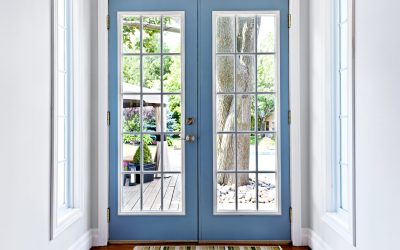
Glass is often used to bring daylight into the foyer, create visual interest, or make a large door feel lighter. However, the amount of direct sunlight reaching the door can influence how much glazing makes sense.
A deeply shaded entry may allow glass to provide natural light without receiving prolonged direct sun. An exposed entry may require closer attention to glass type, orientation, privacy, and interior heat gain.
Front door glass can include:
- Full-height panels
- Narrow vertical inserts
- Decorative glass
- Small upper sections
- Sidelights
- Transoms
The amount and position of glass should support both the architecture and the environmental conditions around the entrance.
How Can a Deep Porch Change the Visual Scale of a Front Door?
Because the entrance sits farther back from the main façade, the door may need stronger visual definition through scale, contrast, lighting, or surrounding materials.
A taller or wider door can sometimes create more presence within a deep entry. Sidelights or glass can also help make the entrance easier to identify.
What Happens When a Front Door Has Very Little Shade?
In Phoenix, that can mean extended sun exposure, heat, dust, and rapid temperature changes between day and night. Material, finish, hardware, and glass should all be selected with those conditions in mind.
Large glass areas that look appealing in a shaded showroom or sample image can behave differently when positioned in strong sunlight. Evaluating the actual orientation of the home can help prevent design decisions that work aesthetically but not practically.
How Should Door Hardware Be Considered in a Sunny Entry?
Handles, locksets, decorative plates, and other metal components can become hot when exposed to direct sunlight. Finish durability can also vary depending on the material and level of exposure.
A shaded porch can reduce direct heating of the hardware, while an exposed entrance may require more careful consideration of finish, placement, and usability.
Can Exterior Lighting Help a Deeply Shaded Entry?
Yes. A deep porch often benefits from thoughtful lighting because the doorway may remain darker throughout the day.
A dark wood or dark-painted door may look dramatic under proper lighting, but it can disappear visually in a poorly lit recessed entry. Lighter finishes may remain more visible but should still coordinate with the surrounding exterior materials.
How Should Phoenix Homeowners Evaluate Porch Conditions Before Choosing a Door?
Notice when direct sunlight reaches the door, how long it remains exposed, whether the porch provides full or partial shade, and how the entrance looks from the street and walkway.
A successful front door design should respond to both the architecture and the environment around it. For Phoenix homeowners planning a new entrance, evaluating porch depth, shade, and sun exposure before finalizing the door can lead to a more practical and visually balanced result.